 A Voice Across Generations
The starting question
What happens to our voice after we have been invited to use it?
We can write to a representative, answer a survey, attend a meeting or make a submission. Sometimes we receive a useful answer and something changes. Sometimes we receive an acknowledgement, then wait. We may never discover whether our contribution was considered, misunderstood, rejected or simply lost along the way.
That uncertainty is where I want to begin.
I have spent years writing questions and proposals about the arrangements we live under. Some began as grievances. Others began with the thought that an ordinary person ought to be able to suggest something better and follow what happened to the suggestion. My concern is with the distance between being allowed to speak and being able to see whether speaking has any consequence.
I do not expect every proposal of mine to be accepted. I would like to know that it was understood, what evidence was considered, who made the decision and why. If something is promised, I would like a way to check whether it happened. If my proposal is mistaken, an explanation may help me improve it or put it aside.
These seem modest expectations. Making them dependable would take work.
A Growing List of My Grievances with the Political System in Australia was one way of approaching this material. There is room for grievances: an obstacle has to be recognised before anyone can remove it. But I want this small book to travel further. What would we put in place? How would children learn to use it? What would they be able to change when they became adults and had children of their own?
That is why I have called it A Voice Across Generations.
For me, a Living Bill of Rights is an idea to explore through those questions. What protections should people be able to rely on? How can they question the decisions affecting them? How can each generation examine the arrangements it inherits, without leaving the people who disagree at the mercy of those who hold power?
Calling something “living” would not make it fair. A website, a vote or a public discussion would not guarantee a wise decision. We would still need evidence, clear responsibilities, protection of private information and ways to challenge the process itself. A popular proposal can have harmful consequences. A quiet objection can identify something everyone else missed.
I would like to start small enough to discover our mistakes. One school exercise or one community concern could teach us more about the practical difficulties than a grand announcement. We could compare the proposed approach with the ordinary route of contacting a representative, and record where each helped or failed.
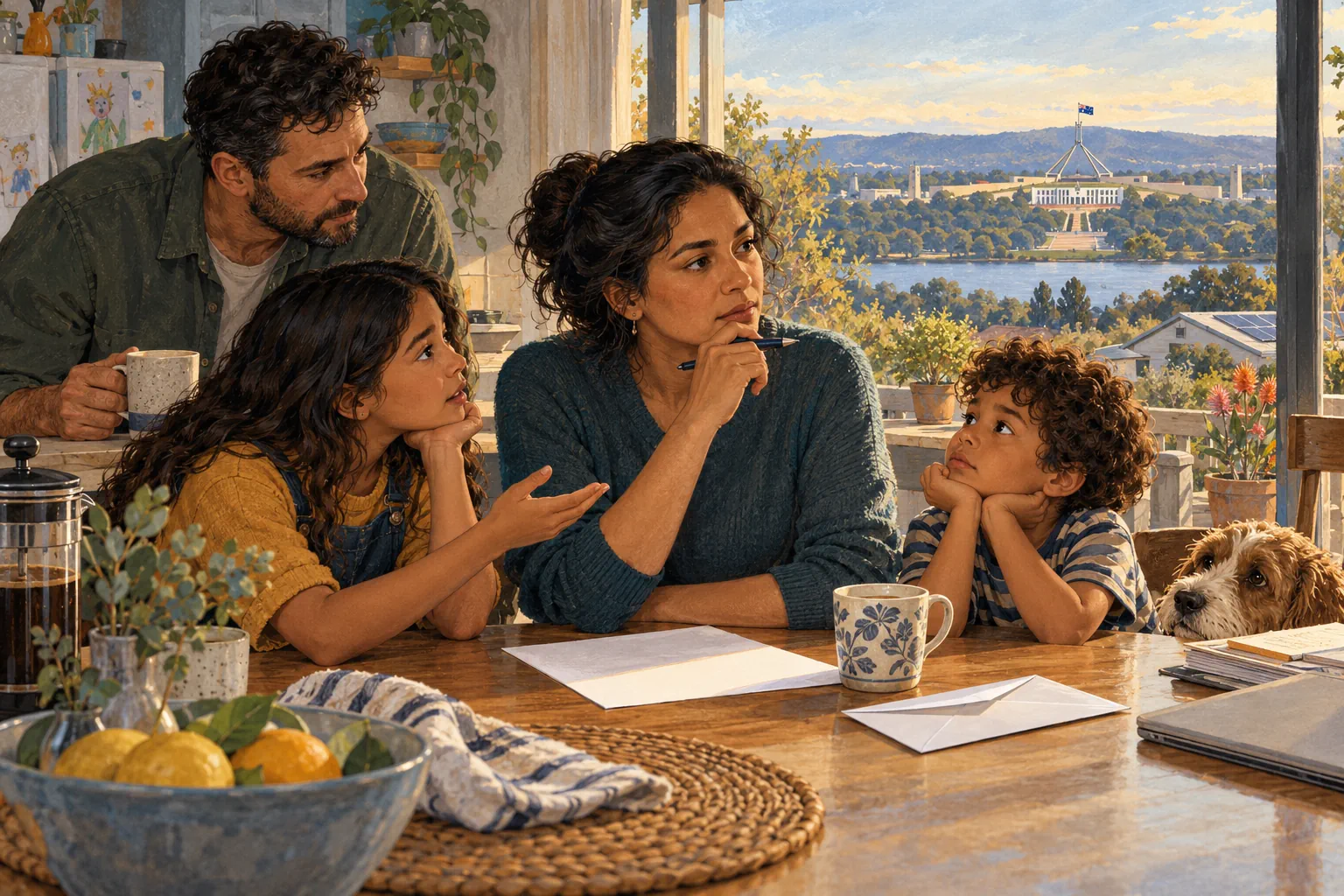
The chapters ahead follow an imagined family through childhood, community life and another generation. Their experiences are illustrations of what might be tried. They are not a report of an operating system or a completed trial.
The family gives the proposal somewhere to live. A child asks a question. An adult has to answer. Years later, that child holds some responsibility and discovers how easily an invitation to participate can become an inconvenience.
I want to follow that change of position as well. It is easy to ask for accountability from outside a decision. What happens when we are the people expected to provide it?
Before we design the tool, I think we need to consider how a person learns that their questions deserve an answer.