 A Voice Across Generations
A Living Bill of Rights
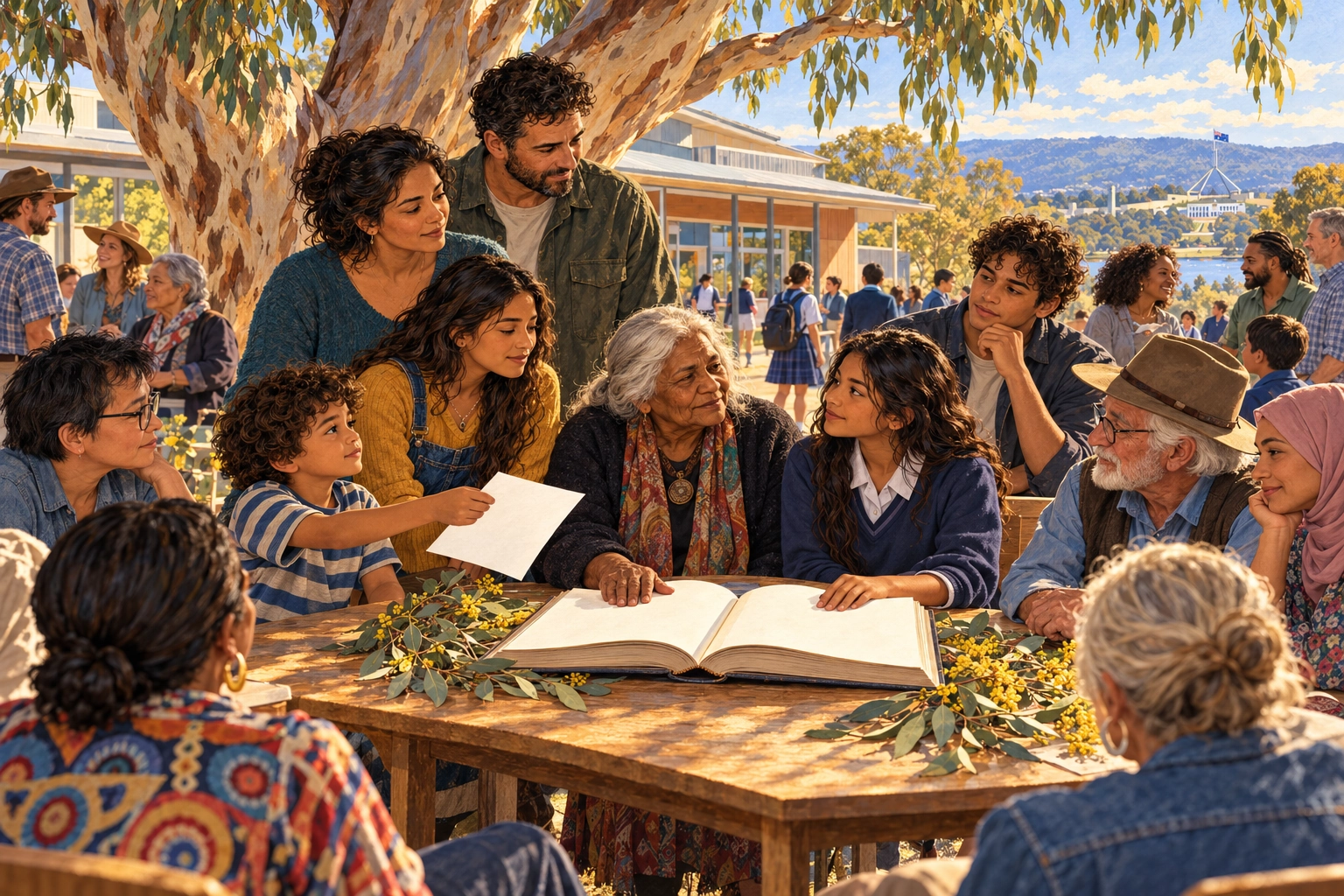
The child who asked why the meeting mattered has become a parent. Her child has begun asking questions of her own. Across those years, the proposal has acquired experience, mistakes and a record that another generation can inspect.
That is the meaning I want to explore in a Living Bill of Rights: a continuing relationship between people, the protections they rely on and the decisions made in their name.
My earlier proposals describe a path from an initial idea through public discussion, analysis, revision and a recorded decision. They also ask how the result can be reviewed later. Those remain useful foundations. The first practical task is to make a small version understandable and testable.
For a trial, I would begin with a clear statement of the proposed change: its aim, who it affects, who could act and what evidence would help assess it. Participants could add support, objections and alternative wording. The record would show revisions without erasing the earlier reasoning. A decision would identify the responsible person or body, give reasons and say what happens next. A later review would ask what actually changed.
Some design choices are still open. How should participants be recruited? Which decisions need a vote, and which need another kind of assessment? How can a person appeal? What information should remain private? Who reviews the moderators? What happens when an emergency interrupts the timetable?
The trial must also distinguish its own agreed procedures from the authority to change public law. A discussion platform or community vote would not, by itself, enact a Bill of Rights. Any proposal to do so would require a separate legal and democratic process. This project begins by testing participation, not by claiming powers it does not have.
I would want basic protections written into its design from the outset: fair treatment, freedom to question, accessible participation, protection of private information and a way to challenge decisions. Updating the process should not mean allowing a temporary majority to strip others of those protections. How those safeguards are secured needs careful work with people equipped to examine them.
There is no need to begin with the grand budgets and statewide targets that appeared in some of my earlier brainstorming. We can begin with one willing group, one useful question and a record of what happened. Cost, maintenance, accessibility and independent evaluation belong in the plan before expansion does.
I am seeking expressions of interest from educators, schools, community groups, developers, researchers and people who would simply like to help test the idea. A classroom simulation could explore the process safely. A community trial could compare it with the ordinary route of contacting a representative, using the approach outlined in the previous chapter.
If you are interested, contact The Blue•Print through its contact page and mention this mini-book and the proposed Living Bill of Rights trial. Tell us what kind of involvement interests you and which questions you think we have missed. There is no need to send sensitive personal histories or information about children to express interest.
I am not asking the next generation to accept my answers. I am asking whether we can leave them a better way to question, contribute, see what happens, and change what no longer works.